
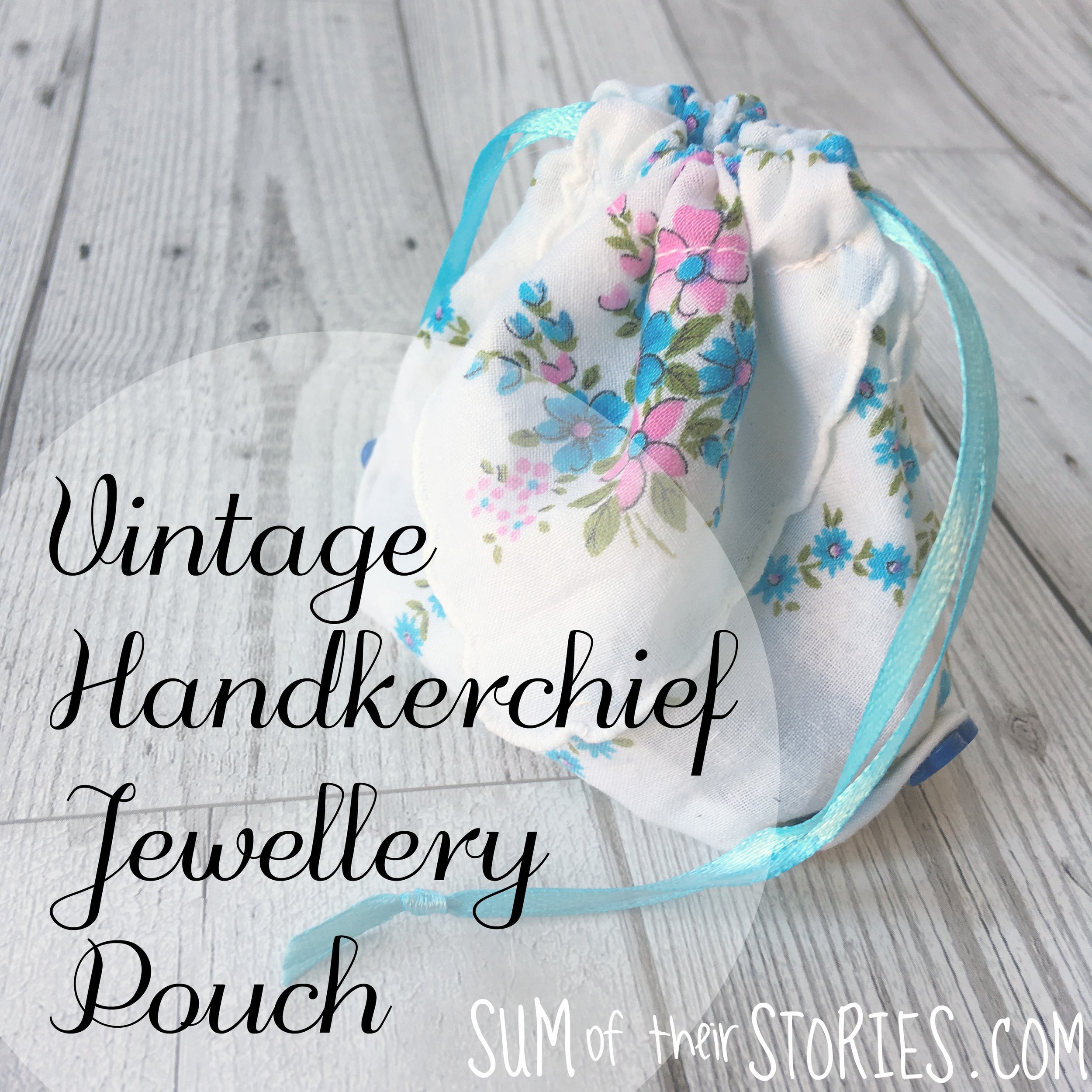
Vintage Handkerchief Jewellery Pouch
/How to turn an old handkerchief into a travel jewellery pouch.

Update: This tutorial was first published in August 2018, it has been updated and republished.
I was lucky enough to be given a pile of vintage handkerchiefs recently from a friend who was clearing out her late mother's things. I've turned most of them into scented sachets and lavender bags but I tried something different out with a floral printed handkerchief. I thought a little origami drawstring pouch might work with the handkerchief to make a travel jewellery pouch.
This tutorial feels like a lot of steps to follow, I certainly took a lot of photos along the way but these are actually really simple to make once you get the hang of them.
If you’d like to make a little travel jewellery pouch but don't have a vintage handkerchief you can just take a square of any lightweight fabric and give it a narrow hem.
My handkerchief measured 15" on it’s diagonal and the pouches turned out 4 3/4" by 3 3/4" - that's 38cm with a pouch ending up 12cm x 9cm for my metric friends. I've tried to stick with inches in this tutorial (I'm bilingual when it comes to inches and cms) just because 15" made the maths easy.
How to turn an old handkerchief into a travel jewellery pouch
So let's get started. To make a Handkerchief Jewellery Pouch you will need:
A Handkerchief
Approx 30” (80cm) of ribbon
2 small buttons
Sewing thread, scissors and a sewing machine
Something to mark the fabric, I used a washable fabric pen
Lay your handkerchief out flat, face down and using a ruler mark it into 1/3's along the diagonal. My handkerchief measured 15" so I marked at points 5" and 10" .

Fold the right side in so the corner point meets the mark you've just made. Press along the fold. You can do this with your nail, “a finger press”, you don't need to get the iron out at this stage.
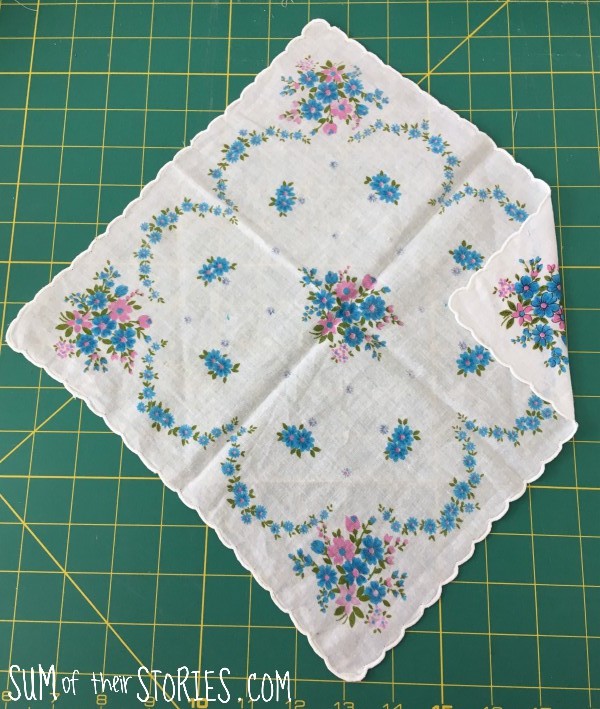
Turn over so the right side is up then fold the left corner over to meet the right. Pin and then sew along the crease you just made.

It’s slightly hard to see in this photo because the print shows through this thin hanky but this is “right side in”, that’s the wrong side you can see uppermost.
If your hanky has lumpy or substantial edging like mine then just snip off the very end of the points. They'll get in the way a bit later.

Turn the tube you've made right side out and flatten, making the seam central. It should look like this:
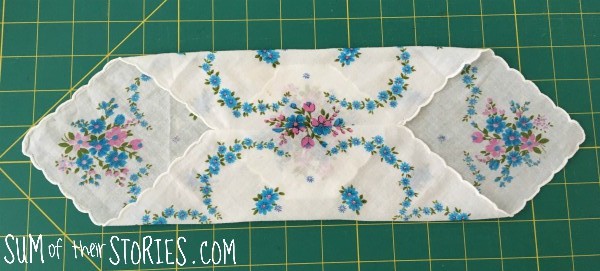
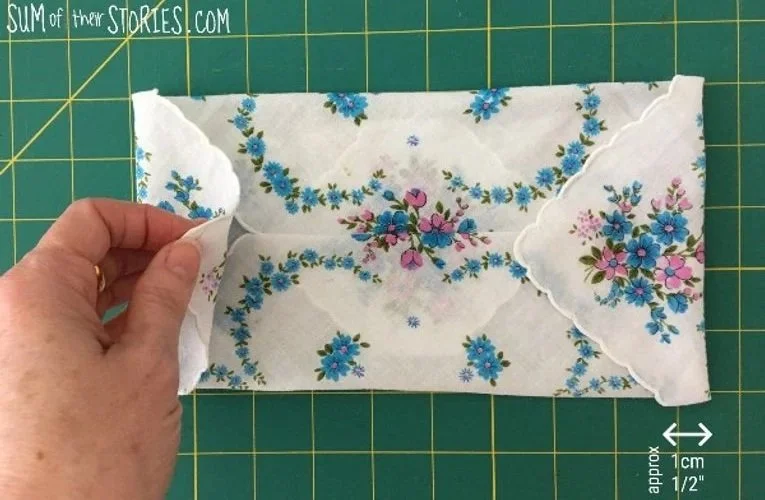
Fold the two remaining corners in, overlapping them a little with the inside edges. This is hard to explain, look at the photos. You want approx 1cm or 1/2 inch overlapping up in the corners.
Stitch the channel

Stitch across one end about 1 cm (or just under 1/2") from the top fold to form a channel each end. Handkerchief fabric tends to be on the flimsy side so when you do these seams start about 1cm in from the edge and then stitch backwards to the edge first before stitching the rest of the seam. This helps prevent the edge of the fine fabric from getting snarled up under your sewing machine foot.
Repeat at the other end.
Stitching the little front pockets
Now you are going to create the little pockets on each side of the pouch. This bit seems like a bit of a faff but I promise it’s worth these extra steps. This step makes the small outside pockets more practical as it stops your smaller jewellery items from slipping right inside the pouch and getting lost or tangled with each other.

Pin the flaps back out of the way and then stitch down the centre seam. (marked in red)
You can release the flaps now, just remove the pins.

Fold the pouch in half and mark 3/4" in from the folded edge (that’s the bottom not the edge with the channel) all the way along. Flip over and repeat on the other side.
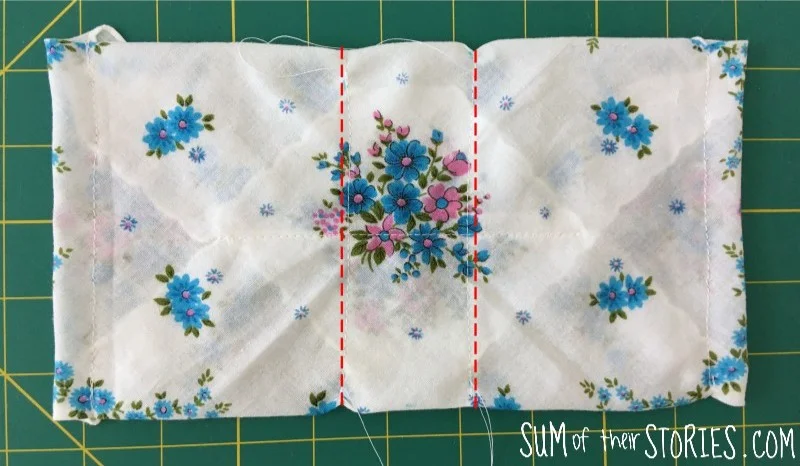
Unfold the “tube” and then stitch across the width of the pouch along the lines that you’ve just marked.
Nearly there!
Fold in half again, flaps inside.


Stitch down each side as close as possible to the edge. Leave an inch clear at the top edge (that’s the edge with the channels)
Turn the pouch right side out and then flatten the corners and stitch across the triangle.

The previous stitching will give you a nice line to follow.

Fold the corner triangle up and add a decorative button to hold it in place. Repeat on the other corner.

Cut 2 lengths of ribbon, you need them each to be approx 3x the width of your pouch. Thread them through the channels, one of them one way, the other the other way. Tie the ends of each ribbon together in a knot, you could add a bead or two first if you like.
That's it, all done. you can keep your necklaces and larger jewellery in the main drawstring section.

You can pop earrings or other little items in the two small pockets on each side.
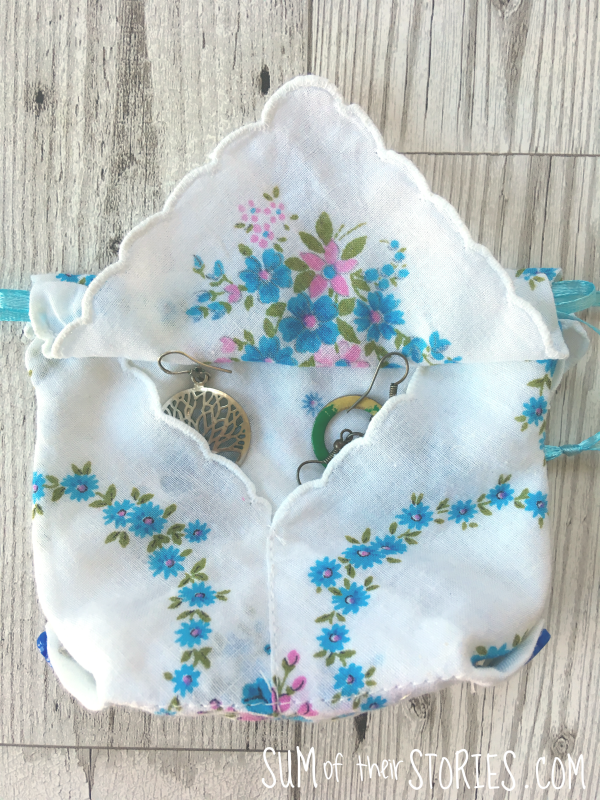


This was such fun to make and a lovely way to give an old handkerchief a new life and purpose.
If you sew with old handkerchiefs you will find that they are not always a perfect square. You can see in my photos that my pouch is a little lopsided at times, with the overlap being slightly larger on one side than the other. Once your pouch is finished you really won’t be able to tell.
More ideas for your handkerchief pouches
I think the little buttons on the corner flaps add a sweet decorative detail to this handkerchief pouch. You could use a bead instead or some decorative embroidery stitches. Another idea would be to stitch those bottom corners so the triangle flap is on the inside.
If you’d like to make a little travel jewellery pouch like this but don't have a vintage handkerchief you can just take a square of any lightweight fabric and give it a narrow hem. Then follow the instructions as above.
You could use any kind of cord for the drawstring, it doesn’t have to be ribbon.
If you’d like to make a more substantial pouch then you could cut 2 squares of fabric, place them right sides together and sew all around the edge, leaving a gap. You’d then turn them right sides out and have a double layer square to make your pouch with. I’ve not tried it but I imagine this would work well if you wanted to size up and make a larger bag.
Have fun!
Julie
I’ll be sharing this idea at these link ups.
You might like to check out some of my other sewing and upcycling ideas:






Details of my scrappy blue quilt made for the Festival of Quilts