
How to make a bag with a multiway handle
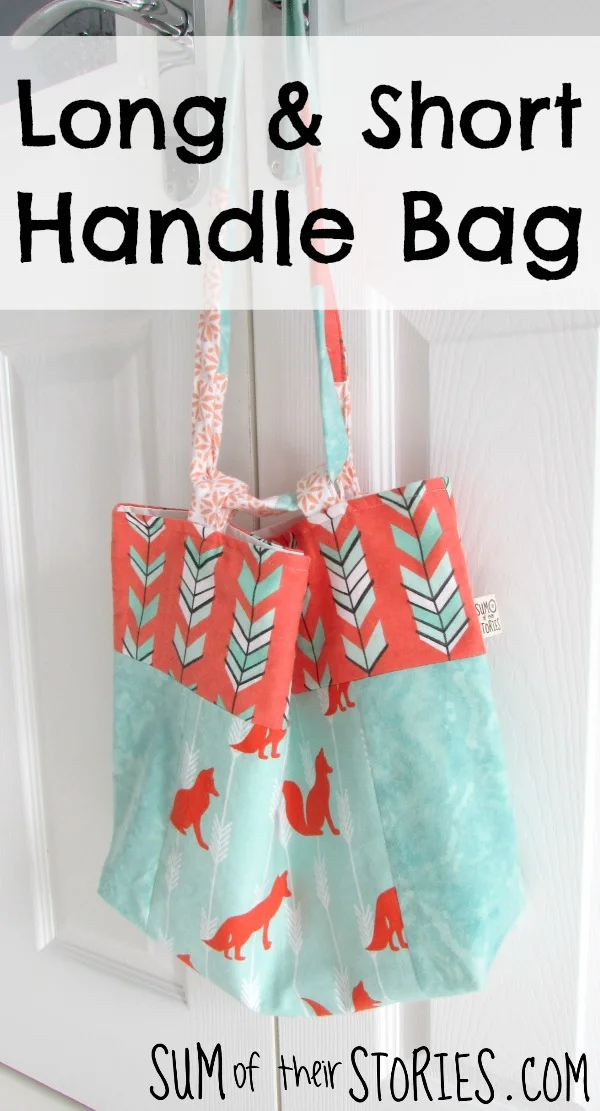
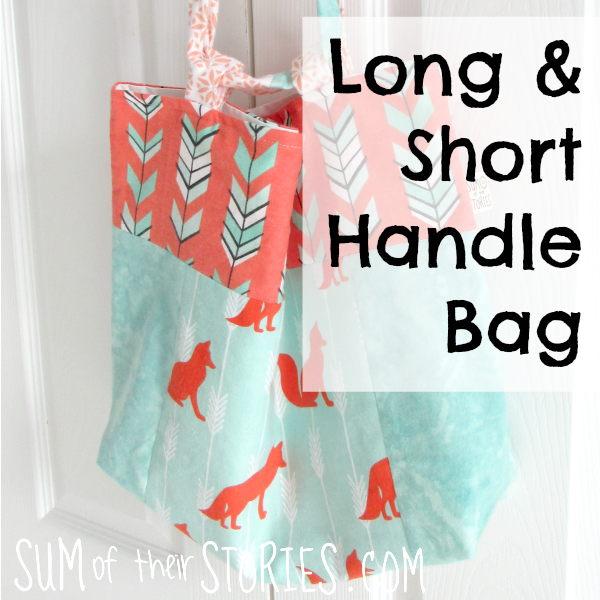
/Sometimes you want a shoulder bag and sometimes you want a hand held shopper. Well this multiway handled bag can be both - yay!

This bag sewing tutorial was first published in August 2017, it has been revised, updated and republished.
I made this adaptable bag as a gift for a friend recently.
This project started when I saw a fabric pack at a reduced price at my local Hobbycraft store. My friend loves foxes so I knew I wanted to make her something with this cute fabric.

The pack contained 12 10.5" squares of brushed cotton flannel fabric, in 5 different designs. For this bag I used 10 of the squares and I have a few scraps left. I used part of an old bed sheet for the lining.
As you can see in the photos, this bag is patchwork so I could use the lovely fox print fabric squares from the pack I’d bought. You could make the same style of bag with any type of patchworked fabric or simply use a single larger piece of fabric.
The finished bag measures approx 14.5" x 17.5" or 37cm x 44cm
I’ve not gone through the process to join the fabric square because you are unlikely to be using the exact same 10.5” squares. Instead I’ll show you the process to make the bag once you have your pieced fabric ready. If you decide to make one of these bags with an adaptable handle from a solid fabric instead of patchwork the process is exactly the same.
How to make a useful bag with versatile multiway long and short handles
You will need:
2 outer pieces of fabric 15"x18" (38cm x 46cm) these are my patchworked pieces
2 pieces of lining fabric 15"x18" (38cm x 46cm)
4 pieces of pattern fabric 3"x4" (8cm x 10cm) for handle loops
2 pieces of patterned fabric 2.5" x 32" (7cm x 81cm) for the handles
A 4” (10cm) length of ribbon and button for the fastening (optional)
Use a 1/4" seam allowance throughout.
Press any patchwork seams open before you start making your bag.
Place the 2 outer pieces right sides together and stitch on 3 sides:
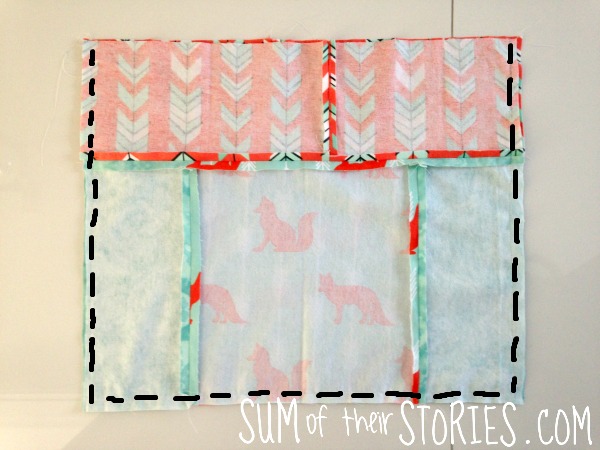
Join the 2 lining pieces in the same way as the outer pieces but LEAVE A 4" GAP in the bottom middle. THIS IS IMPORTANT!
Box the corners
Starting with the outer bag, press the seams open, then fold the bottom corner sideways so the side and bottom seam line up. Measure 2" down the seam from the point and mark a line straight across. Stitch this line doing a few back stitches at each end to make the stitching secure.
Repeat for the other corner of the outer bag and both the lining corners.

Trim the excess.
This is what your boxed corners will look like from the outside.

Make the handles and handle loops
The handles for this bag are longer than you’d make for a regular tote bag, your fabric pieces are 2.5" x 32". You are making 2 separate handles.
Press a 1/4" hem on each long edge of the fabric strip, then fold the handles in half lengthways. Pin and top stitch to close them but leave a good 2" open at each end.

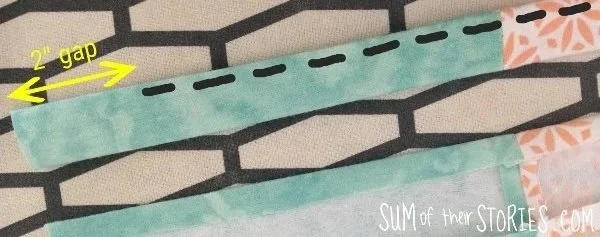
Next you need to make the handle loops.
Take the 3" x 4" pieces and fold each one in same way as you did for the handles. Top stitch all the way along to close them. I didn’t but you can top stitch both sides of the handle loops to give them extra stability. Make 4 handle loops.

Once your handle loops are made, fold them in half and position them, raw edges together, on the top edge of the bag outer, 2.5" from the seam edge.
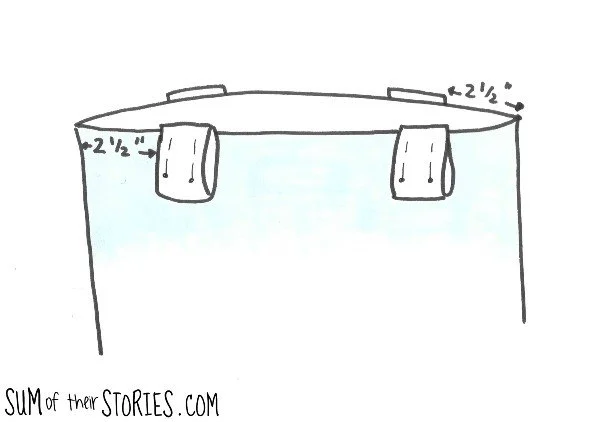
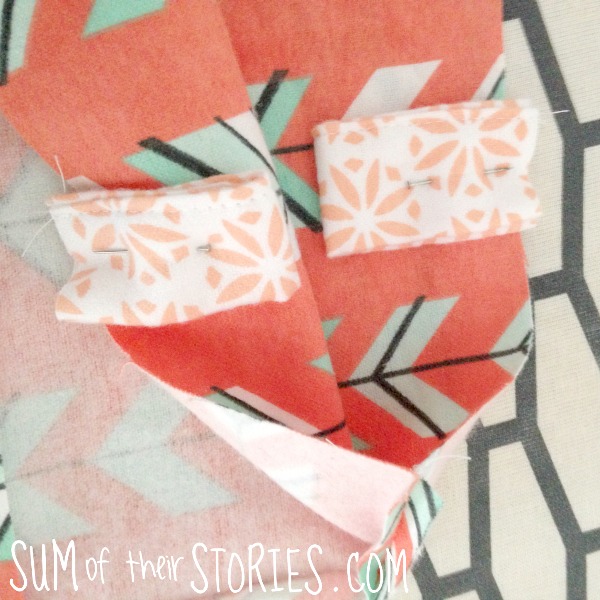
I just left them pinned but you could tack them in place if you prefer. You’ll just need to be a little careful later if you leave them pinned. In the photo above I show only 1 pin in each loop. On reflection, if you are just going to leave the loops pinned you’ll want to secure them with at least 2 pins each, just to make sure they don’t move around.
At this point you may wish to add a ribbon loop fastening too - I forgot this step and had to add my loop fasting later in a slightly less neat way! If you do want to add a ribbon and button fastening then fold your 4" (10cm) length of ribbon in half and place it in the centre of the outer back, exactly the same way round as the handle loops.
Assembling the bag
Turn the bag lining right side out, and place it inside the bag outer. Match up the side seams and pin all around the top edge. You are sandwiching those handle loops between the bag outer and the lining.
Stitch all around the top edge. Go slowly when stitching over the handle loops and your sewing machine will thank you.
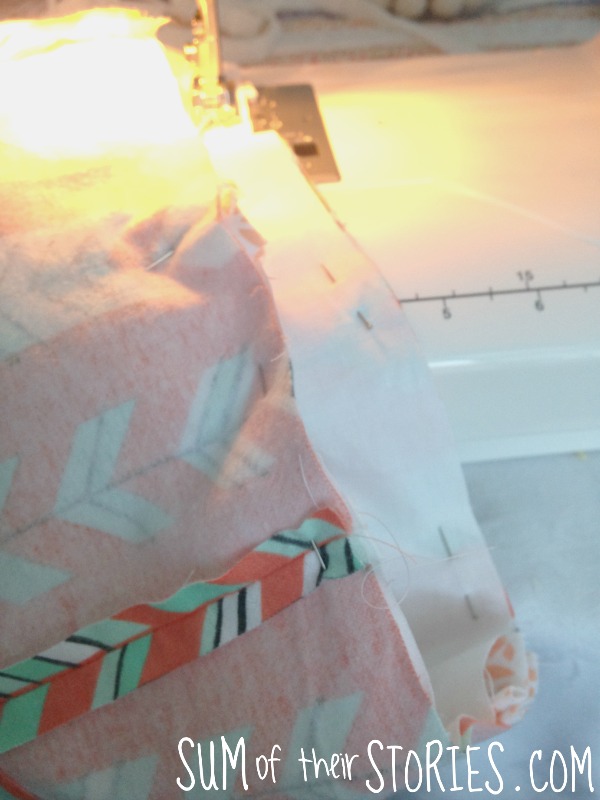
Turn the bag right side out through that gap you left in the lining. Do this very carefully if you left the pins in the handle loops to avoid jabbing yourself! Remove any remaining pins.

Stitch the gap in the lining closed (on the machine or by hand) then give everything a nice press with the iron.
Push the lining inside the bag then top stitch the top edge to keep everything neat and tidy. Again, go slowly over where the handle loops are, that's a lot of layers of fabric for your machine to deal with. This extra round of stitching gives the top of your bag a nice neat look and also gives those handle loops extra strength.
Attaching the handles
Thread your handles through the handle loops.
One handle goes through the loops on the front of the bag and one handle goes through the loops on the back.

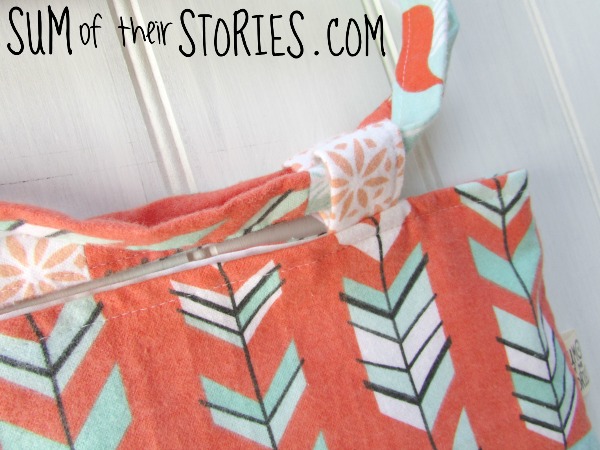
Join the handles up by placing the right sides together on those open ends and stitching straight across. Pay particular attention to making sure the handle is not twisted before you join the ends.
You can see in this photo I only left about 1.5" open at the ends and it was a bit fiddly, leaving 2" would make this step easier.
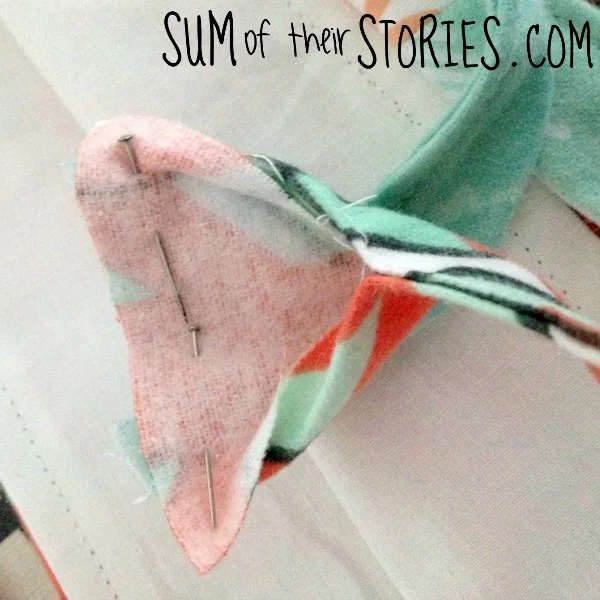
Turn the raw edges inside, press and top stitch to close.

Finally, add a button to the centre of the bag front. If like me you forgot to add the ribbon loop, just sew it on now as neatly as you can.
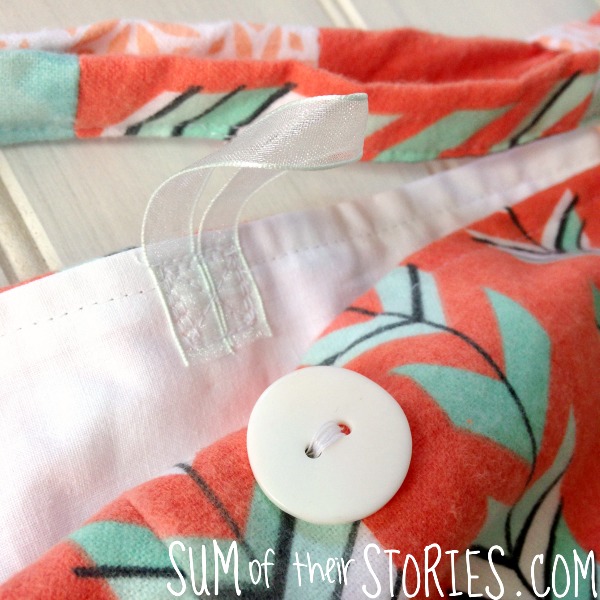
You could use a snap fastening or hook and loop tape instead or leave a fastening off altogether.
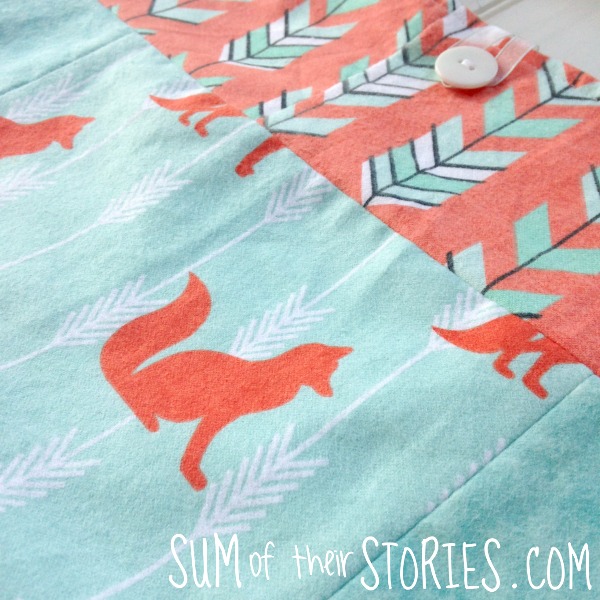
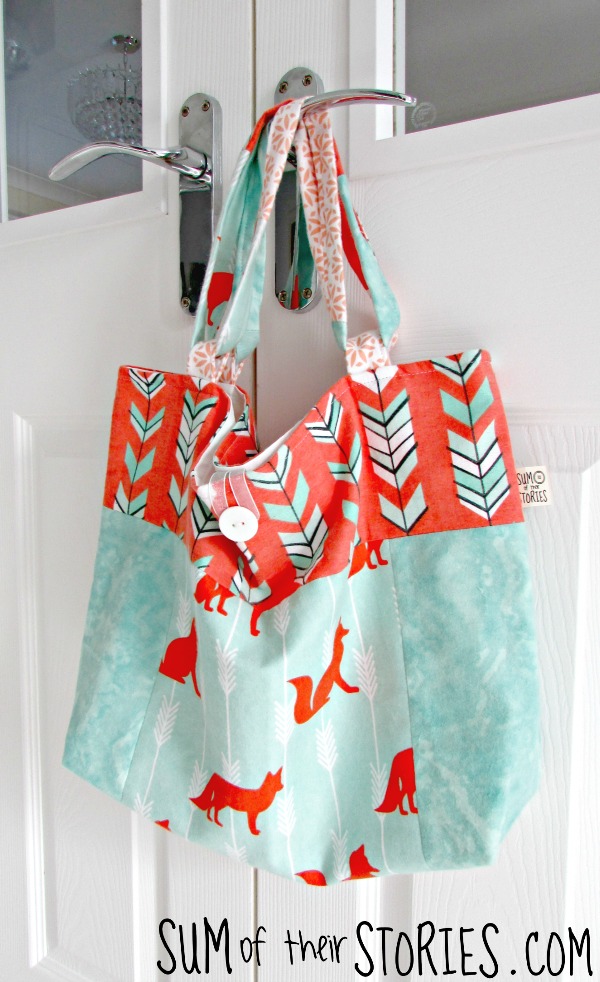
Your versatile bag is complete! You can use it with the handles pulled up double to carry it in your hand or as a shoulder bag with the handles long.

Suitable Fabrics
This bag is made from brushed cotton flannel with a cotton bed sheet lining. Other suitable fabrics for the outer would be:
quilting cotton
chambray
old curtains
denim ie old jeans, but only if it’s fairly thin denim. Old fashioned super thick denim would just be too difficult to sew into a bag like this
For the lining I’d recommend something a little thinner, old sheets or pillowcases, shirt fabric etc.
If you do choose a thicker fabric like denim or upholstery fabric for your multiway handle bag then you’ll need to make the handle loops from a different thinner fabric. There is no way a regular domestic sewing machine would cope with the bag assembly stage going over so many layers of such thick fabric. A contrast fabric for a pop of colour would look great though. Or perhaps you could use belt loops from old jeans - I’m going to try that soon and report back!
Adding interfacing to your bag or not
I went for a floppy sort of bag feel but if you wanted your bag to be more substantial you could add an interfacing of some sort quite easily too.
It seems these days that most bag making tutorials involve copious amounts of iron on interfacing. If you like firm bags with structure then that is the way to go. Personally I like a soft floppy bag that I can fold up small and tuck in a coat pocket, handbag or car glove box. I find it more useful so I have a shopping tote handy whenever I need one. This is all down to personal preference though and you can easily just add interfacing to the bag pieces before sewing them together if that’s the look and feel you like.
If you enjoy making bags do check out these other bag making tutorials:





A free cross stitch and needlepoint pattern, colourful nasturtiums